

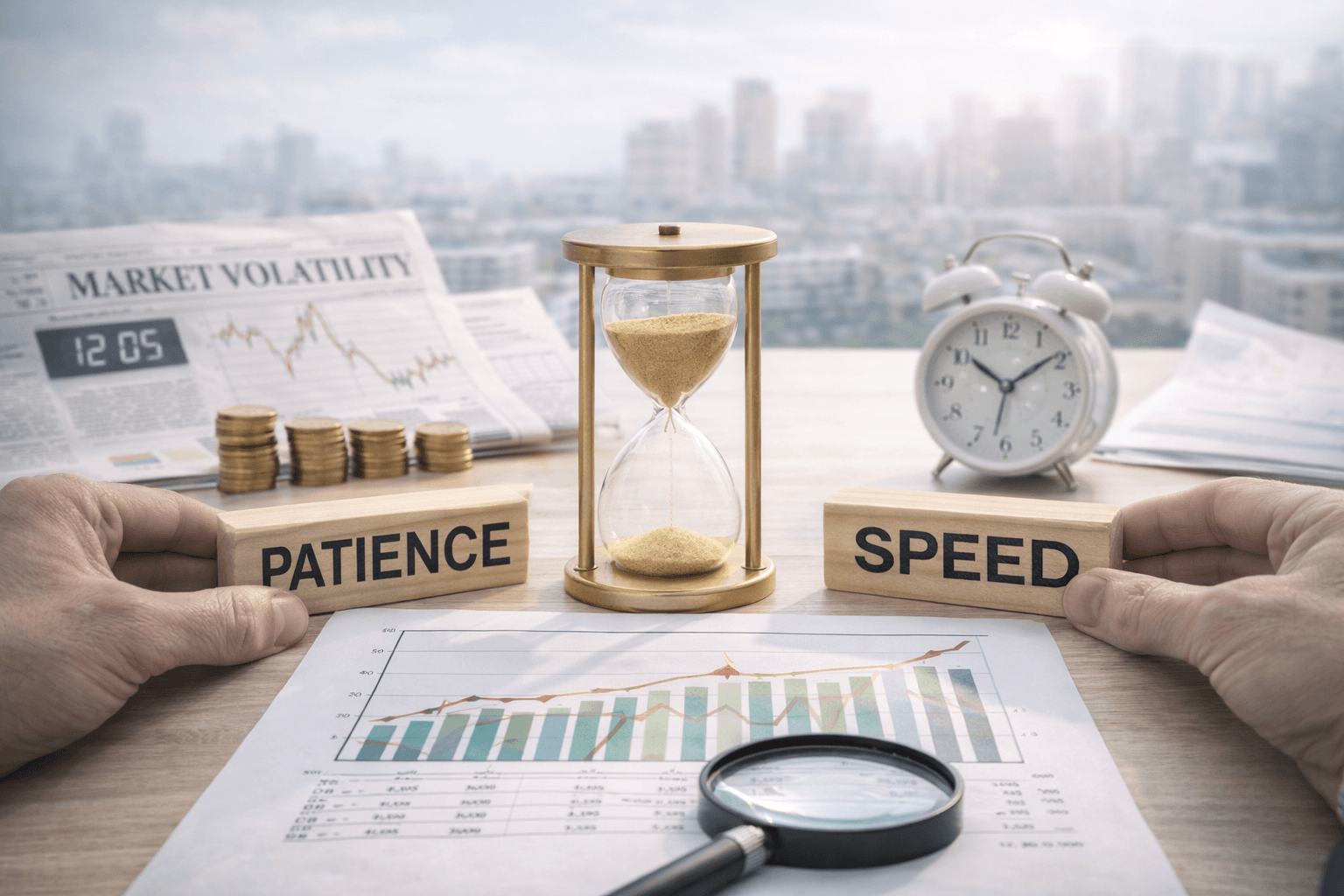
In the world of investing, the allure of quick returns is a powerful force. News cycles are dominated by stories of overnight successes and rapid market shifts, creating a perception that speed is the primary driver of wealth. However, seasoned investors understand a different truth: enduring success is rarely built on haste. It is forged through discipline, strategic foresight, and, most importantly, patience. The impulse to react to every market fluctuation can lead to costly mistakes, while a steady, long-term approach allows portfolios to weather volatility and compound growth over time.
This guide explores the foundational principles of investment discipline. We will delve into why a patient strategy often yields superior results compared to high-frequency trading and reactive decision-making. By examining the structural advantages of long-term thinking, we will uncover how discipline protects capital, maximises returns, and builds a resilient portfolio capable of achieving its objectives across economic cycles. From understanding market psychology to analysing tangible assets, we will illustrate how patience is not a passive act but a strategic advantage.
The Fallacy of Speed in Investing
The financial markets are often portrayed as an arena where the quickest and most aggressive participants win. This narrative, fuelled by depictions of fast-paced trading floors and algorithmic transactions, overlooks a fundamental reality: for most investors, trying to outsmart the market on a daily basis is a losing game. The pursuit of speed often leads to higher transaction costs, emotional decision-making, and an unhealthy focus on short-term noise rather than long-term value.
True investment success is more akin to planting a forest than winning a sprint. It requires careful planning, nurturing, and the patience to let growth happen organically. Companies like Apavou Investments build their philosophy on this very principle, recognising that sustainable value is created over decades, not days.
High-Frequency Trading vs. Long-Term Value Creation
It is essential to distinguish between trading and investing. Trading often involves holding assets for short periods to profit from price fluctuations. While some can succeed at this, it is a high-risk, high-stress endeavour that requires immense resources and expertise. For the average investor, it’s a path fraught with peril.
Investing, in contrast, is about acquiring assets with the intention of holding them for the long term, allowing their intrinsic value to appreciate. This approach is based on fundamental analysis—understanding the health of a business, the quality of its assets, and its long-term growth prospects. An investment in a well-managed company or a strategically located piece of real estate is not a bet on tomorrow’s price but a belief in its enduring value. The Apavou Group, for example, has focused on developing assets that serve community needs for generations, a strategy rooted in long-term value creation, not short-term speculation.
The Psychological Traps of Short-Term Thinking
Human psychology is often our greatest enemy in investing. Two primary emotional drivers, fear and greed, are amplified by a short-term focus.
- Fear of Missing Out (FOMO): When a particular stock or asset class experiences a rapid price surge, the temptation to jump in is immense. This often leads to buying at the peak, just before a correction.
- Panic Selling: Conversely, during a market downturn, the fear of further losses can trigger a panic sell-off. This locks in losses and prevents the investor from benefiting from the eventual recovery.
A disciplined, long-term approach helps mitigate these emotional responses. By setting clear investment goals and sticking to a pre-defined strategy, you can tune out the market noise and make rational decisions based on your long-term objectives, rather than reacting to anxieties in the moment.
The Compounding Power of Patience
Albert Einstein is often quoted as having called compound interest the “eighth wonder of the world.” While the attribution may be anecdotal, the power of compounding is undeniable. It is the engine of long-term wealth creation, and its fuel is time. Patience allows this engine to run at its full potential.
When you invest, your returns begin to generate their own returns. Over time, this effect snowballs, leading to exponential growth. A strategy focused on speed, involving frequent buying and selling, constantly interrupts this process. Transaction costs, taxes on short-term gains, and the risk of mistiming the market all eat away at the potential for compounding.
A Mathematical Advantage
Consider a simple example. An initial investment of $10,000, earning an average annual return of 8%, will grow to over $46,600 in 20 years if left untouched. However, if an investor attempts to time the market, pulling out during downturns and jumping back in, they risk missing the best-performing days. Studies have consistently shown that missing just a handful of the market’s best days can drastically reduce overall returns, crippling the compounding process.
A patient investor understands that volatility is a normal part of the market cycle. Instead of reacting to it, they see it as an opportunity. Downturns can be a chance to acquire quality assets at a discount, further enhancing long-term returns.
Patience in Real Asset Development: A Case Study from Mauritius
The principle of patience is not confined to the stock market. It is perhaps even more critical in real estate and infrastructure development. Projects undertaken by firms like Apavou Mauritius illustrate this perfectly. Developing a successful commercial or residential complex is a multi-year endeavour that requires unwavering discipline.
Consider a project like Plaisance Mall. Its success was not the result of rapid construction and quick sale. It involved years of careful planning, market research, securing permits, phased construction, and a long-term strategy to attract the right mix of tenants. The goal was not just to build a shopping centre, but to create a sustainable community hub that would generate stable, long-term rental income and appreciate in value over decades. This is investment discipline in action, resisting the temptation to cut corners for a faster outcome in favour of building an asset with enduring quality.
Building a Portfolio Designed for the Long Haul
A patient investment strategy is not a “set it and forget it” approach. It requires a disciplined framework for portfolio construction and management. This framework should be built on diversification, quality, and a clear understanding of your personal financial goals and risk tolerance.
The Role of Diversification
Diversification is the cornerstone of risk management. By spreading investments across different asset classes (stocks, bonds, real estate), geographies, and industries, you can reduce the impact of poor performance in any single area. A well-diversified portfolio is more resilient to market shocks and provides a smoother ride over the long term.
For example, an investor might balance their holdings in public equities with direct investments in tangible assets, such as commercial real estate. An asset like The Cube, a modern business complex, can provide stable rental income that is often less correlated with the fluctuations of the stock market, adding a layer of stability to a portfolio.
Focusing on Quality Assets
Patience is only a virtue if you are holding quality assets. A long-term strategy will not save a poor investment. This is why rigorous due diligence is a critical component of investment discipline.
What Defines a Quality Asset?
Whether it is a company or a property, quality assets share common characteristics:
- Strong Fundamentals: For a company, this means a healthy balance sheet, consistent cash flow, and a sustainable competitive advantage.
- Strategic Location: For real estate, location is paramount. A property like Terre d’été, a residential development, derives its long-term value from its desirable location, thoughtful design, and proximity to essential amenities. Its value is not based on speculative trends but on the fundamental human need for well-located, quality housing.
- Effective Management: A skilled and ethical management team is crucial for navigating challenges and capitalising on opportunities. Apavou Investments places significant emphasis on partnering with or developing projects led by experienced teams with a proven track record.
Aligning with Long-Term Goals
Your investment strategy should directly reflect your financial objectives. Are you saving for retirement, a child’s education, or wealth preservation? Each goal comes with its own time horizon and risk profile. A disciplined investor identifies these goals first and then builds a portfolio to achieve them. This goal-oriented approach provides stability during periods of market turmoil, reminding you of your long-term purpose and helping to resist the temptation to make rash decisions.
The Apavou Group: A Philosophy of Patient Capital
The history and portfolio of the Apavou Group serve as a powerful real-world example of investment discipline. The group’s success across the Indian Ocean, particularly in Mauritius, has been built on a foundation of long-term vision and patient capital deployment, not on chasing fleeting trends.
From Vision to Enduring Landmarks
The group’s approach to development has always been about creating assets that will stand the test of time, both physically and economically. This requires a deep understanding of demographic trends, infrastructure needs, and the evolving economic landscape.
Projects like The Cube and Plaisance Mall were not conceived to generate a quick profit. They were strategic investments designed to become integral parts of the economic fabric of their communities. The Cube addresses the growing demand for modern, flexible office spaces in a key business hub. Plaisance Mall serves as a vital commercial and social centre for a large residential population.
This long-term perspective requires immense patience. It involves navigating complex regulatory environments, managing multi-year construction timelines, and securing long-term tenants. The payoff is not a one-time gain but a legacy of stable, income-producing assets that appreciate in value and contribute to regional development.
Terre d’été: Building Communities, Not Just Houses
The residential project Terre d’été further exemplifies this philosophy. The focus was not simply on maximising the number of units built. Instead, the vision was to create a desirable living environment, with careful attention to green spaces, community facilities, and architectural quality. This approach may have a longer development cycle than a high-density, cookie-cutter project, but it results in a more valuable and sustainable asset. Homebuyers are not just purchasing a structure; they are investing in a lifestyle and a community. This builds a stronger brand and ensures the long-term desirability and value of the entire development.
Patience as Your Greatest Investment Ally
The modern financial world bombards us with messages that glorify speed and short-term gains. Yet, the most reliable path to building and preserving wealth lies in the opposite direction. Investment discipline, characterised by a patient, long-term perspective, allows you to harness the power of compounding, avoid emotional pitfalls, and build a resilient portfolio of quality assets.
As demonstrated by the strategic approach of firms like Apavou Investments and the enduring value of assets developed by the Apavou Group in Mauritius, success is a marathon, not a sprint. By focusing on fundamental value, diversifying wisely, and aligning your strategy with clear, long-term goals, you can transform patience from a passive virtue into your most active and powerful investment tool. Let the market’s noise fade into the background and allow time to work as your greatest ally.
 Previous Post